


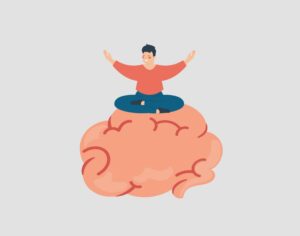



Ever felt like you’ve “lost your motivation” overnight? It’s not a lack of willpower; it’s actually your brain protecting you. Learn how the habenula, your brain’s built-in motivation switch, responds to stress and failure, and how to keep it from shutting down your drive.
The Hidden System Controlling Your Motivation
Has this happened to you? You start strong with a new health goal, work project, or personal habit, and at first, everything feels possible. Then one setback hits, and suddenly you don’t feel like trying anymore. That crash isn’t a result of laziness or a lack of discipline. It’s your brain’s protective mechanism kicking in.
Deep within your brain lies a small but powerful structure called the habenula, which is responsible for signaling disappointment and regulating motivation. When the habenula senses “failure,” it tells your brain to stop wasting energy, effectively flipping off your motivation switch.
At Fresh Tri, we refer to this moment as a “habenula hit”; a natural brain response where effort or challenge is misread as “failure,” even when you’re simply learning or trying something new.
Understanding How the Habenula Works
The habenula resides just above the thalamus and serves as the brain’s internal feedback monitor. We can consider it a built-in evaluation system that decides whether an action is worth repeating.
When things go well, such as receiving praise or seeing progress, the habenula quiets down, allowing dopamine (the chemical that motivates you) to flow freely. However, when you perceive failure or criticism, even minor ones, the habenula becomes activated. It suppresses dopamine, creating that heavy, “why bother?” feeling.
This mechanism evolved to protect us from wasting effort on things that don’t work. However, in our perfection-driven world, it often misfires, shutting down motivation even when we’re learning or trying to improve.
Survival Mode vs. Success Mode
When the habenula fires too frequently, it traps us in a state of survival mode, characterized by fear, urgency, and stress. In this mode, we might appear productive, but our brains are operating under pressure, not purpose.
Survival signals include:
- Fear of failure (“If I mess up, it’s over”)
- Constant pressure (“I have to prove myself”)
- Exhaustion or burnout (“I can’t keep this up”)
While survival mode can create short bursts of performance, it comes at a cost: burnout, anxiety, and disconnection.
By contrast, success mode is rooted in curiosity, safety, and engagement. When we feel supported and free to experiment, dopamine stays active, and the habenula stays calm. That’s when learning, creativity, and motivation thrive.
The difference between these modes is emotional safety. Feeling safe gives the brain permission to keep trying.
How to Avoid Triggering the Motivation Switch
You can’t turn off your habenula, but you can train your brain to interpret challenges differently. That’s where our neuroscience-based Iterative Mindset Method™ comes in. It is a practice designed to help you blame the brain, not yourself, and keep your motivation intact.
Here are three practical ways to stay out of “habenula shutdown”:
1. Practice Iteration Over Perfection
Instead of expecting instant results, view each attempt as a test. Ask yourself: What did I learn? What might I tweak next time? This mindset reframes setbacks as data, not failure, keeping dopamine flowing and motivation alive.
2. Create Psychological Safety
Your brain needs to feel safe to try new things. Celebrate progress, no matter how small. Leaders, coaches, and teams who promote safety over pressure create environments where people are more resilient, creative, and engaged.
3. Follow Curiosity
Joy and curiosity are powerful antidotes to fear. When you approach habits, work, or goals with genuine interest rather than obligation, your brain stays motivated for longer.
Key Takeaway: Understanding Your Habenula Protects Your Motivation
Your habenula isn’t the enemy; it’s a misunderstood ally. It’s trying to protect you from perceived failure, even when that “failure” is just part of growth.
By understanding how it works, you can break the cycle of stress and self-blame and begin practicing from a place of safety and curiosity. That’s the foundation of sustainable success. At Fresh Tri, we help you retrain your brain through practice and iteration, so progress feels natural and effortless.
So, next time you feel stuck or unmotivated, pause and ask yourself: Is this fear, or fatigue from a habenula hit? Then, take a deep breath, make an iteration, and keep going. Your brain and your future self will thank you.