
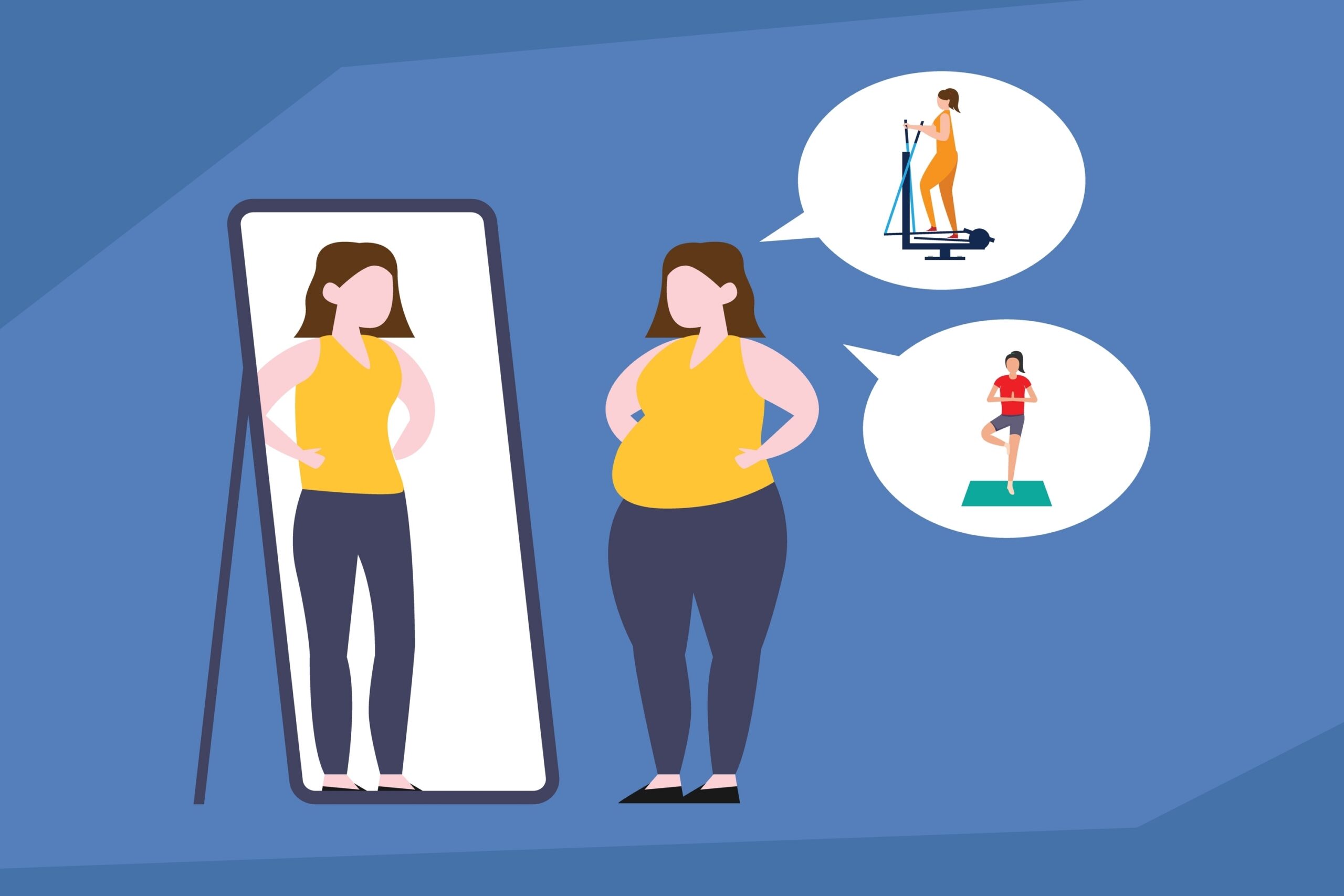






A weight loss plateau can feel like the most confusing part of your journey.
You didn’t quit.
You didn’t fall off.
You’re still eating better. Moving your body. Showing up.
And yet… the scale hasn’t moved in weeks.
If you’re in a weight loss plateau right now, take a breath. This isn’t failure. It’s adaptation.
And adaptation requires a different strategy than starting.
Why a Weight Loss Plateau Happens (Even When You’re Doing Everything Right)
Here’s the part most programs don’t explain: You can do everything right and still hit a weight loss plateau.
Not because you lack discipline or because your body is “broken.” It is because your body adapts.
Metabolic Adaptation Explained
When you consistently eat less or move more, your body adjusts. It lowers how many calories you burn at rest as you subconsciously move less throughout the day.
Your workouts become more efficient, hunger hormones increase, while fullness hormones decrease.
This is called metabolic adaptation. The calorie deficit that worked before? It’s no longer a deficit.
Your body learned. That’s not sabotage. That’s survival wiring.
Not All Plateaus Are the Same
Not every weight loss plateau is about fat loss.
Sometimes:
-
You’re retaining water.
-
You’re building muscle.
-
Stress increases cortisol.
-
Sleep is disrupted.
And sometimes it’s not a weight loss plateau at all. It’s a fitness plateau or even a habit plateau.
When habits stop feeling exciting, that’s dopamine adjusting. The behavior is becoming automatic. Less thrilling. More sustainable.
Which, ironically, is progress.
How Long Does a Weight Loss Plateau Last?
This is one of the most common questions: How long does a weight loss plateau last?
The honest answer? It depends on what you do next.
A weight loss plateau can last:
-
A few weeks if you make small adjustments
-
Several months if you repeat the same approach
-
Indefinitely if frustration leads you to quit
A plateau isn’t a timeline. It’s a signal.
Your body has adapted to your current stimulus. Something needs to shift — or be accepted.
What to Do During a Weight Loss Plateau
When progress stalls, the instinct is to push harder.
Cut more calories.
Add more cardio.
Be stricter.
But intensifying often backfires. More restrictions can increase stress. Then that stress can increase cortisol. The increased pressure can activate your brain’s failure detector — and motivation drops.
Instead of intensifying, iterate.
Iterate, Don’t Intensify
Iteration means changing one variable at a time. Not everything. Just one thing.
Maybe you:
-
Add strength training if you’ve only been walking
-
Increase protein instead of cutting calories
-
Take a 1–2 week maintenance break
-
Improve sleep before adjusting food
-
Change workout intensity
One shift. Then observe.
This is how you move through a weight loss plateau without burning out.
One Adjustment at a Time
You already know this from building habits.
Adjustments or tweaks beat dramatic overhauls.
Give each change 2–3 weeks before judging it. Your body doesn’t respond overnight — and it didn’t adapt overnight either.
Patience is part of sustainable weight loss.
When a Weight Loss Plateau Is Actually Progress
This part is uncomfortable.
You only hit a weight loss plateau if you were consistent long enough for your body to adapt.
That means:
-
You built habits that stuck.
-
Your metabolism adjusted to a new normal.
-
Your workouts improved.
-
Your brain rewired.
People who constantly start and stop rarely reach a plateau.
A plateau often means you stayed in the game.
The 6–8 Week Reality
Most weight loss plateaus show up around weeks 6–8 of any journey.
The early momentum fades. The novelty wears off. Dopamine stabilizes. The body adapts.
This is where many people quit. Not because it stopped working, but because they expected linear progress in a non-linear system. Weight loss doesn’t move in a straight line. It moves in cycles:
Progress to Adaptation to Plateau to Adjustment to Progress. The plateau is a part of the cycle.
Do You Need to Push Past It?
Here’s the deeper question:
Is this weight loss plateau a problem — or is this your body finding a sustainable equilibrium?
Consider maintaining if:
-
You feel strong and energized.
-
Your habits are livable.
-
Your mental health feels stable.
-
Further weight loss would require extreme restriction.
Consider adjusting if:
-
You have health markers that need improvement.
-
You’re early in your journey.
-
You feel physically capable of more.
Not every plateau needs to be broken. Sometimes it needs to be respected.
A Different Way to Think About Your Weight Loss Plateau
Your brain has a built-in failure detector. When you interpret something as failure, motivation drops. If you label a weight loss plateau as “I’m failing,” your brain responds by reducing drive. If you label it as “My body adapted,” your motivation stays intact.
There is no fail. Only practice.
A weight loss plateau isn’t a wall. It’s data.
You don’t need to start over, or punish yourself, or anything else.
You need to iterate.
Progress is iterative. Adaptation is normal. And sustainable weight loss happens when you work with your biology — not against it.
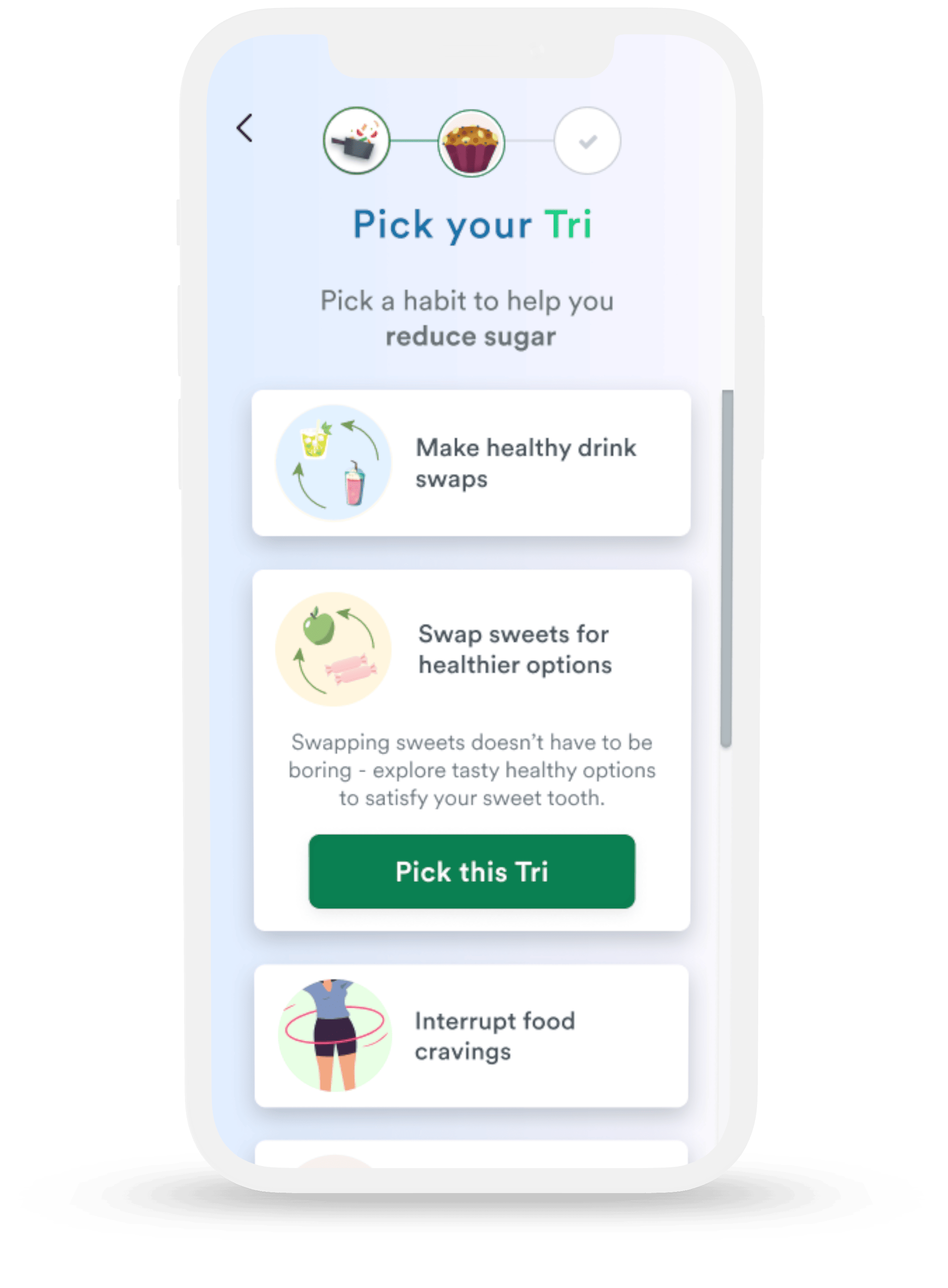
If you’re experiencing a weight loss plateau, the Iterative Mindset Method™ or the Fresh Tri app can help you find your next iteration.
Or take the Iterative Mindset Quiz to discover what adjustment your body may need most right now.