




By now, you’ve probably restarted at least once.
Maybe you took a break over the holidays, got sick, or life just got messy for a minute and your habits fell off.
And you got back on track. Good for you. Seriously.
But here’s the thing you might not want to hear: You’re going to stumble again.
Not because you’re doing something wrong or because you lack willpower. But because that’s how behavior change works. It’s messy. It’s full of stops and starts. And the people who succeed long-term aren’t the ones who never fall—they’re the ones who get better at getting back up.
That’s resilience. And it’s not something you’re born with. It’s something your brain learns through repetition.
Why Emotional Resilience Isn’t a Personality Trait but a Pattern Your Brain Builds
We talk about resilience like it’s a fixed quality. Like some people “have grit” and others don’t.
That’s not accurate.
Resilience is a learned response pattern—a habit. Every time you face a setback and keep going anyway, you’re teaching your brain that setbacks aren’t endings. They’re just part of the process.
And here’s what’s wild: the more setbacks you work through, the better your brain gets at handling them.
This isn’t motivational fluff but proven neuroscience.
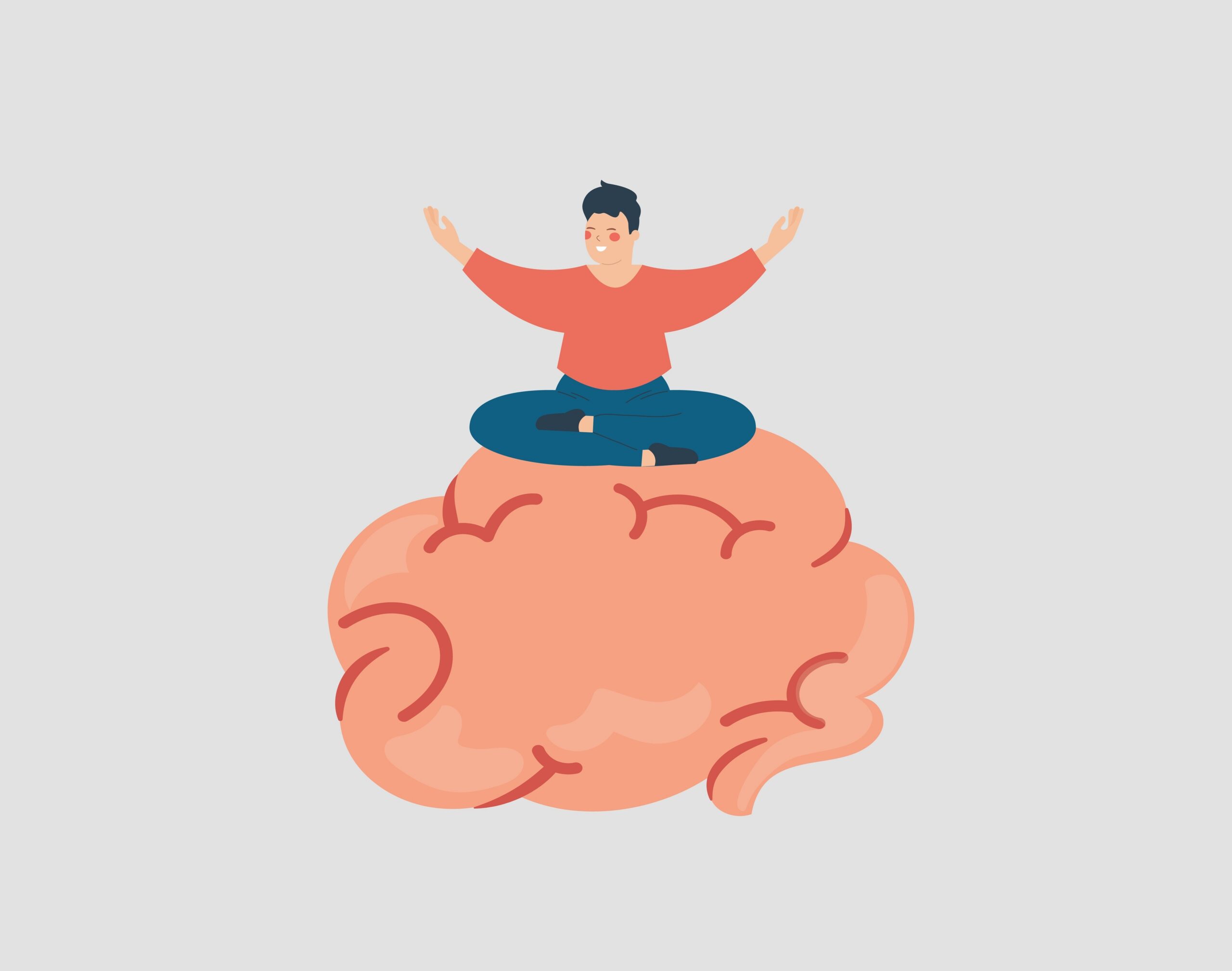
Your brain is constantly adapting based on experience. When you repeatedly practice bouncing back—when you try, stumble, adjust, and try again—you’re literally rewiring the neural pathways that determine how you respond to difficulty.
The first time you restart after a break? It feels hard. Discouraging. Like evidence that you’re “not good at this.”
The fifth time? Your brain recognizes the pattern. It knows what to do. The emotional spiral is shorter. The recovery is faster.
That’s resilience building in real time.
And the key word there is building. You’re not unlocking some hidden trait you already had. You’re constructing a new skill through iteration and repetition.
The Neuroscience of Resilience: What Changes in Your Brain Over Time
Let’s get into what actually happens in your brain when you practice bouncing back repeatedly.
When you experience a setback (like missing workouts, falling off your eating routine, or skipping your stress management practice), your brain registers it as a mismatch. It expected one thing (you’d keep going) and got another (you stopped).
In the early stages of habit formation, mismatches trigger strong emotional reactions. Disappointment. Frustration. Shame. That’s because your brain hasn’t yet learned that pauses are survivable.
But when you continue practicing and restart after that first break… then the second… and then the third—something shifts.
Your brain starts to recognize setbacks as temporary and solvable rather than catastrophic. The emotional intensity decreases. The recovery time shortens. You develop a dose of stress vaccine, where small, repeated exposures to difficulty build your capacity to handle it.
This is why people who’ve been practicing the Iterative Mindset Method™ for months describe setbacks differently than beginners:
- Beginners: “I messed up. I’m terrible at this. Why do I even try?”
- Experienced practitioners: “Okay, I paused. What needs to adjust?”
Same setback. Completely different neural response.
That difference is resilience. And it only develops through repeated cycles of trying, pausing, and resuming.
How to Build Resilience: Why Multiple Setbacks Make You Stronger
Here’s the paradox of building mental strength: You don’t get better by avoiding setbacks. You get better by moving through them.
Think about it. If you never paused your habits, you’d never learn how to restart them. Haven’t experienced lost motivation? You’ll never discover what helps you find it again. If everything always went smoothly, your brain would never develop the adaptability that makes long-term change possible.
Every time you face a challenge and keep going, you’re adding to a resilience bank account:
- First setback: You learn that pausing doesn’t erase progress
- Second setback: You learn what helps you restart faster
- Third setback: You learn to anticipate and plan for disruptions
- Fourth setback: You stop seeing them as failures and start seeing them as data
By the time you hit your tenth or twentieth cycle, restarting feels routine. Not easy, necessarily. But familiar. Manageable. Something you know how to do.
This is what progress through practice really looks like. You can’t develop resilience in a vacuum. You have to iterate and grow it in the wild.
And the beautiful thing? Each cycle makes the next one easier.
The Identity Shift: From “Someone Who Fails” to “Someone Who Adapts”
The real transformation happens when your self-concept changes.
Most people start their journey of change with a success/failure mindset:
- If I’m consistent = I’m succeeding
- If I pause or slip = I’m failing
This binary thinking makes every setback feel like evidence of personal inadequacy. And that’s exhausting.
But after enough cycles of trying, pausing, and resuming—after enough proof that you can get back on track—your identity begins to shift:
From: “I’m someone who struggles with habits”
To: “I’m someone who keeps adapting”
This isn’t just semantic. It’s a fundamental rewiring of how you interpret your own behavior.
When you see yourself as someone who adapts, setbacks stop threatening your identity. They’re just part of the process. Part of your process.
And that shift changes everything.
People who develop strong emotional resilience don’t describe themselves as “disciplined” or “naturally motivated.” They describe themselves as flexible, persistent, and willing to keep adjusting.
That’s the identity you’re building every time you iterate. Every time you restart without shame. Every time you tweak your approach instead of abandoning it.
You’re becoming someone who bounces back. Not because it’s your personality. Because it’s your practice.
Resilience Training Across Multiple Cycles: What the Pattern Looks Like
So what does long-term resilience training actually look like? Here’s the pattern most people experience:
1: The First Stumble
- What happens: You pause for the first time after building momentum
- Emotional response: Panic, shame, “I knew I couldn’t do this”
- Recovery time: Days to weeks
- What you learn: That restarting is possible (even if it doesn’t feel easy)
2-3: The Pattern Emerges
- What happens: You pause again (vacation, illness, busy season)
- Emotional response: Frustration, but less catastrophizing
- Recovery time: Days
- What you learn: Specific triggers and what helps you restart
4-6: Building Confidence
- What happens: Disruptions keep happening (because life)
- Emotional response: Acceptance, maybe mild annoyance
- Recovery time: 24-48 hours
- What you learn: How to anticipate and plan for pauses
7+: Resilience as Default
- What happens: Setbacks become routine parts of the journey
- Emotional response: Curiosity, problem-solving mode
- Recovery time: Same day or next day
- What you learn: That you can handle whatever comes
This is what building mental resilience looks like over time. Not one dramatic comeback. Dozens of small ones that compound into unshakeable confidence.
How Long Does It Take to Build Resilience?
The honest answer? Longer than you want it to.
Research on habit formation shows that psychological resilience develops over months, not weeks. You need multiple cycles of disruption and recovery before the pattern solidifies.
But here’s what makes it worth the wait: resilience is transferable.
When you develop the ability to bounce back with your health habits, that skill spills over into other areas of your life. Work setbacks feel less catastrophic. Relationship challenges feel more navigable. You start approaching problems with a practice-and-adjust mindset instead of an all-or-nothing one.
You’re not just building better health habits. You’re building a more adaptable version of yourself.
And that’s the kind of transformation that lasts.
What Makes Resilience Stick (And What Doesn’t)
Not all approaches to building resilience are equal. Here’s what actually works long-term:
What Builds Lasting Resilience:
✅ Repeating small recoveries (restarting with low pressure)
✅ Tracking patterns, not perfection (noticing what helps vs. what doesn’t)
✅ Normalizing setbacks (expecting them as part of the process)
✅ Practicing self-compassion (talking to yourself like a friend)
✅ Focusing on learning (what’s this setback teaching me?)
What Undermines Resilience:
❌ Avoiding setbacks entirely (no practice = no skill development)
❌ Treating every pause as a crisis (keeps the emotional intensity high)
❌ Starting over from scratch each time (ignores accumulated learning)
❌ Comparing your cycle to someone else’s (everyone’s timeline is different)
❌ Demanding immediate bounce-back (rushes the recovery process)
The people who develop deep emotional resilience do so by embracing the mess. By expecting setbacks. By treating each one as practice rather than proof of failure.
That’s not resignation…it’s wisdom.
The Fresh Tri App: Where Resilience Is the Practice
You’re not here because you need fixing. You’re here because you’re building something that lasts.
And resilience? It’s not a prerequisite for success. It’s what you develop through the practice of trying, adjusting, and continuing.
This is what the Iterative Mindset Method™ teaches: You don’t need to be resilient before you start. You become resilient by refusing to quit.
Every time you restart after a pause, you’re adding evidence that you can handle this. Every time you adjust your approach instead of abandoning it, you’re proving to your brain that setbacks are solvable.
And over time—across cycles and months and years—that evidence becomes your new identity.
You’re not someone who never falls. You’re someone who always gets back up.
And that’s the kind of strength that changes everything.
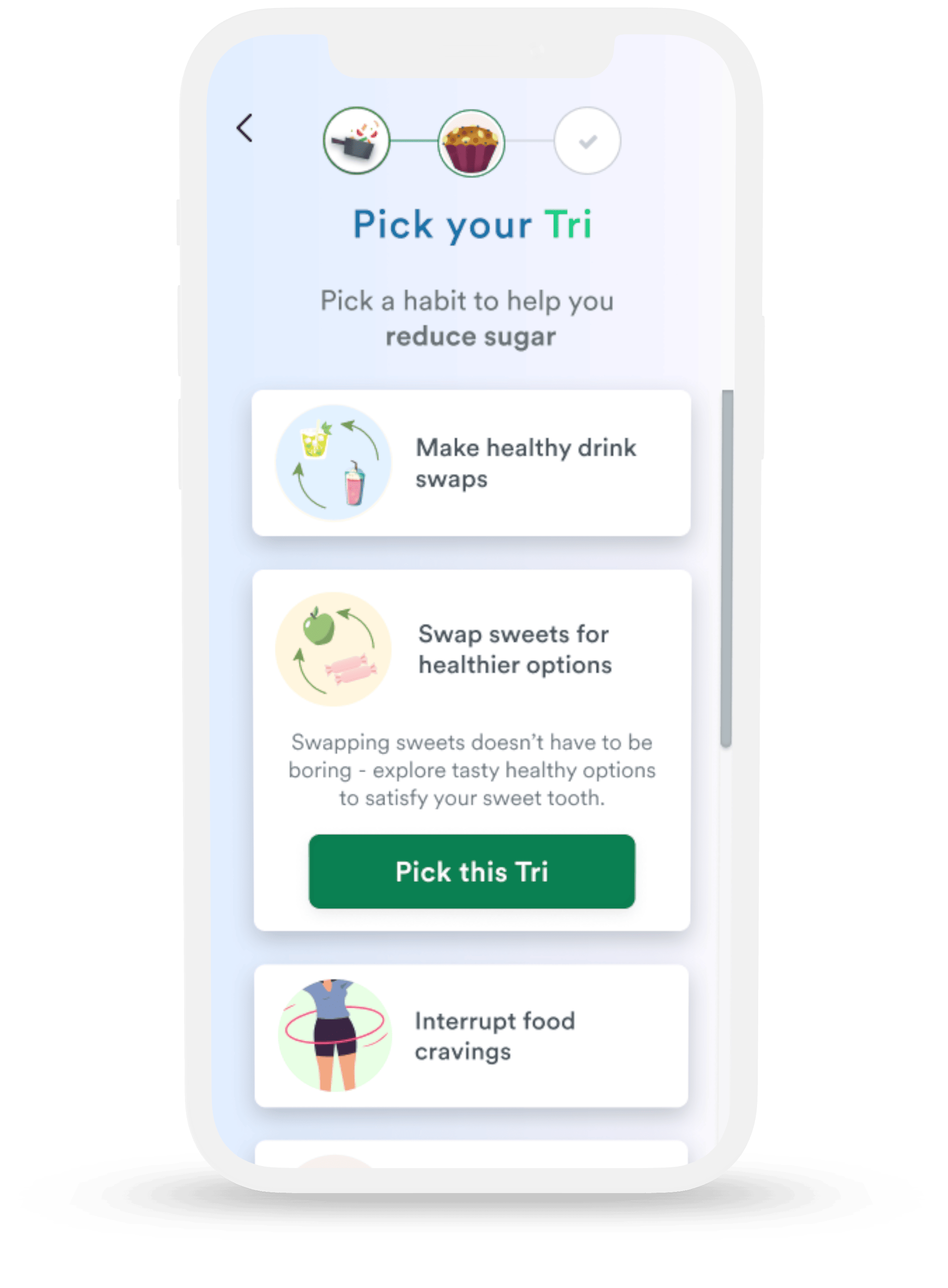
Ready to keep building? The Fresh Tri app gives you the tools, science, and community support to practice resilience in real time. Download the app or take the Iterative Mindset Quiz to discover your starting point.
And remember: slow and steady wins the race. 🐢