What Most GLP-1 Cost Analyses Miss… It’s Costing Employers Millions

Stop tracking prescription expenses. Start understanding what’s driving them.

Most benefit leaders think they’ve done a full cost analysis of GLP-1 drugs. But there’s one critical driver almost no one is accounting for. You haven’t truly modeled GLP-1 costs until you’ve modeled human behavior.
Plan tweaks and rebates won’t fix a demand engine fueled by daily habits. Until you change that, your pharmacy spend is on a treadmill — always moving, never truly reaching a destination.

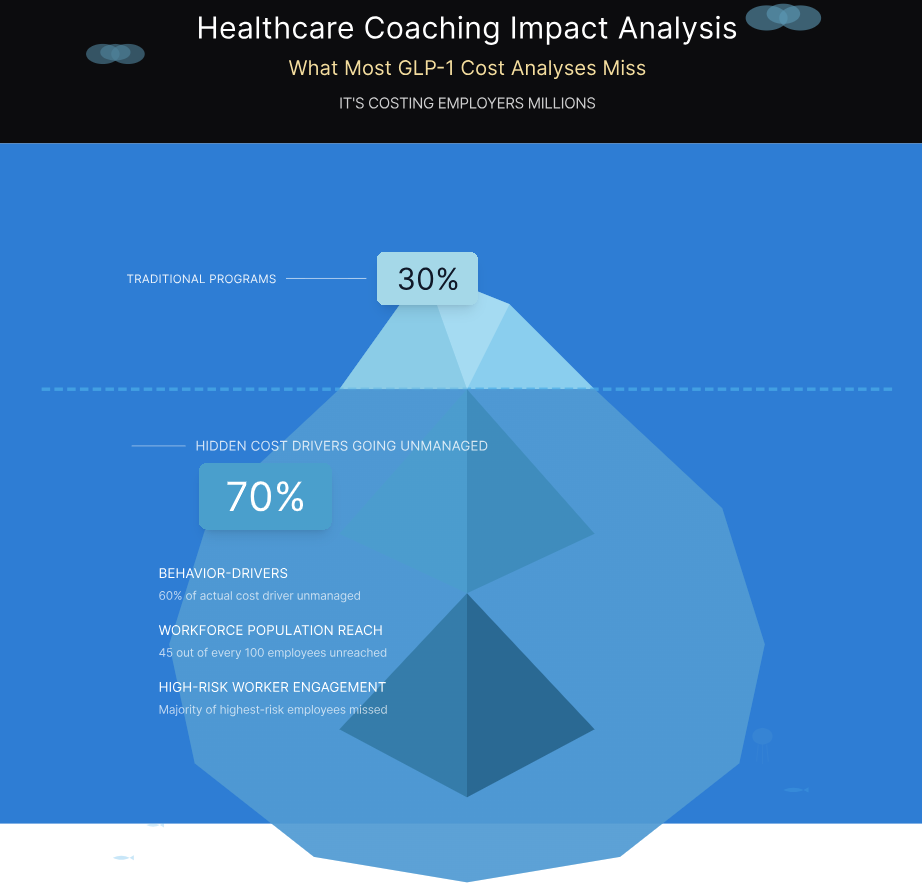
3 Overlooked Factors

Factor 1: Focus on Spend, Not Drivers

Oversight

Cost analyses tend to look at claims, not causes.

Truth

Behavior, not just biology, fuels GLP-1 demand.

Implication

Until you influence lifestyle habits, you’ll always be reacting to Rx need, not preventing it.

Factor 2: Assuming Coaching = Behavior Change

Oversight

Many assume coaching programs solve the root issue.

Truth

After showing 20-50% initial engagement, few coaching programs sustain participation or habit formation long-term without neuroscience-based methods

Implication

If your “behavior change” strategy isn’t grounded inneuroscience, it’s not scalable and not effective.

Factor 3: Reaching Overlooked Populations

Oversight

Traditional wellness toolsmiss frontline, deskless, and underserved workers.

Truth

These workers often have the highest risk and highest cost potential.

Implication

If your strategy doesn’treach them, it’s incomplete.

Here’s how that looks for Organizations

Final Thoughts

The most powerful lever in controlling GLP-1 spend isn’t in your Benefits Manager programming decisions; it’s in your population’s daily choices. Influencing those choices requires a method that’s proven AND works with the brain, not against it.

Ready to See What Behavior-Centered Cost Control Looks Like?
